Legal IPTV Service 2026:
Is IPTV Legal in the USA & UK?
IPTV is a legitimate and widely used technology. Whether a specific IPTV service is legal depends entirely on whether the provider holds the appropriate rights to the content they distribute. This plain-language guide explains the distinction, what to look for in a legitimate IPTV provider, and how to make a responsible choice.
Is IPTV legal? The technology versus the service
IPTV — Internet Protocol Television — is a technology, not a category of content. The technology itself is entirely legal and is used by major broadcasters, telecommunications companies, and video streaming services all over the world. Sky, BT, Virgin Media, AT&T, and many other large media companies deliver television content using IPTV technology. The technology is neutral; what determines legality is how it is used and who is doing the distributing.
The key question is not "is IPTV legal?" but rather "does the specific IPTV provider I am considering hold the appropriate rights to the content they are distributing?" Content rights — the licences that allow a provider to distribute television channels and programmes to subscribers — are complex, market-specific, and expensive. A legitimate provider has negotiated and paid for these rights. An illegitimate one has not, and is effectively redistributing content they have no legal authority to distribute.
This distinction matters for several practical reasons. An unlicensed IPTV service is typically less stable than a licensed one, because it operates in a legally precarious environment where its infrastructure can be disrupted at any time by rights holders or enforcement agencies. It may disappear without warning, taking any prepaid subscription fee with it. And using a service you know or have good reason to believe is operating without proper authorisation carries its own legal dimension in both the USA and UK, where copyright law addresses not only infringers but in some circumstances those who knowingly facilitate or benefit from infringement.
The US Copyright Office provides authoritative information on copyright law in the United States at copyright.gov — this is the official reference for US copyright law, which underpins the content rights framework for IPTV in America. For UK viewers, Ofcom's published guidance on internet-delivered television services is the relevant regulatory reference. Reviewing these resources gives you the official framework within which IPTV services must operate legitimately.
The remainder of this guide focuses on practical ways to evaluate whether a specific IPTV provider is operating responsibly — which is the information most viewers actually need when making a subscription decision.
Signs of a legitimate IPTV provider — and warning signs to watch for
These signals do not provide legal certainty, but they are meaningful practical indicators of how a provider is likely operating.
Transparent business information
Legitimate businesses have a name, a registered address, and contact information they are willing to share. A provider who operates entirely anonymously — no company name, no contact address, no traceable business registration — is operating in a way that a legitimate business has no reason to do.
Clear terms of service and pricing
A responsible IPTV provider publishes clear pricing, renewal terms, cancellation policy, and terms of service. These documents are standard for any legitimate subscription service and exist to protect both the provider and the customer. Their absence is a meaningful red flag.
Willingness to answer direct questions
A legitimate provider has nothing to hide. If you ask reasonable questions about their business — how long they have been operating, what regions they serve, how they handle service outages — they should answer them directly. Evasive or vague responses to reasonable pre-sales questions are a significant warning sign.
Consistent, long-term operation
A service that has operated consistently for several years without disappearing and reappearing under different names demonstrates the kind of stability that is much harder to sustain for providers operating without proper authorisation. Longevity is not a guarantee of legitimacy, but instability and rebranding are consistent with unauthorised operation.
Pricing far below market rate
Content rights are expensive. A provider offering access to thousands of live channels — including premium sports and entertainment — at a price that seems impossibly low is almost certainly not paying for the rights to that content. Unusually cheap IPTV pricing is one of the clearest signals that a provider is operating without proper licensing.
No customer support before purchase
Providers who only accept payment without offering any pre-sales contact, or who make it impossible to speak with anyone before subscribing, are typically not operating with the customer-service infrastructure of a legitimate business. Test the support channel before you pay.
Note: green indicators suggest responsible operation; amber indicators suggest areas for caution. None of these signals alone is definitive proof of legality or illegality. Use them as a practical due-diligence framework.
IPTV legality in the USA and UK: what you need to know
The legal framework around IPTV differs between the US and UK. Here is the essential context for viewers in each market.
IPTV and US copyright law: the framework for American viewers
In the United States, content rights for television programming are governed by copyright law under Title 17 of the United States Code, administered by the US Copyright Office. Television broadcasters, sports leagues, and content studios hold the rights to their programming and licence those rights to distributors — cable companies, satellite providers, and streaming services — in exchange for licensing fees.
An IPTV service distributing this content without the appropriate licences is infringing those copyrights. Rights holders — including sports leagues, film studios, and broadcasters — have been increasingly active in pursuing unlicensed streaming operations, including IPTV providers who distribute their content without authorisation. The FCC and Department of Justice have also been involved in enforcement actions against operators of large-scale unauthorised streaming services.
For US viewers evaluating IPTV providers, the practical implication is straightforward: use the signals listed in the previous section to assess whether a provider appears to be operating responsibly, test before committing with a trial period where possible, and ask direct questions of any provider you are seriously considering. A provider who cannot give you clear, direct answers to reasonable questions about their service should be viewed with caution.
- IPTV technology is legal; unauthorised content distribution is not
- Content rights for live TV are expensive and market-specific
- Enforcement against unlicensed IPTV operators has increased
- US Copyright Office at copyright.gov is the official reference
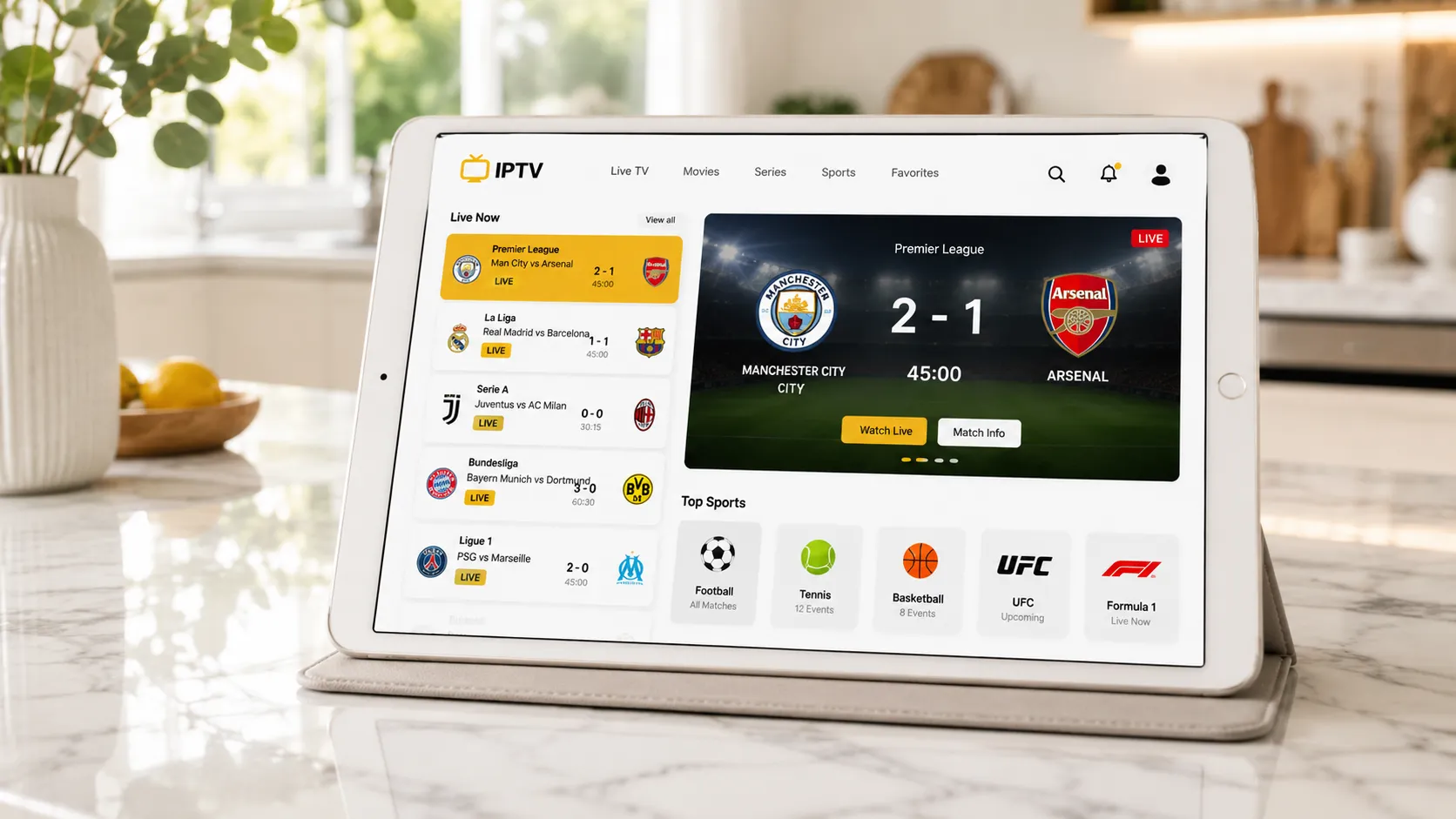
IPTV and UK copyright law: what UK viewers need to understand
In the United Kingdom, television content rights are governed by the Copyright, Designs and Patents Act 1988 and subsequent amendments. The UK's media regulator Ofcom oversees broadcasting licensing, and rights holders — Premier League, broadcasters, film studios — actively pursue enforcement against unauthorised IPTV services distributing their content without proper licences.
The Premier League in particular has been highly active in pursuing legal action against operators of IPTV services that carry its matches without authorisation, using blocking injunctions and criminal enforcement. UK courts have issued orders requiring internet service providers to block access to servers used by unauthorised IPTV services during live matches. The scale and sophistication of rights holder enforcement in the UK has increased considerably over the past several years.
For UK viewers, the risks of using an unlicensed IPTV service include: service disruption during live events due to blocking measures, sudden disappearance of the provider with no refund, and in more serious cases — particularly where commercial scale is involved — potential legal exposure. Using IPTV services for content you are legally entitled to access, and choosing providers who operate transparently, is the responsible approach. Our IPTV vs cable guide also explores how legitimate IPTV compares to traditional subscription television for UK viewers.
- UK rights holders actively enforce against unlicensed IPTV
- Blocking injunctions target servers used for live sports piracy
- Ofcom oversees licensed broadcasting in the UK
- Choosing transparently operating providers protects you
Have questions about how FlixIPTV8K operates?
We believe a responsible IPTV service should be able to answer reasonable questions. Contact us on WhatsApp before subscribing — we will answer directly and honestly.
How to use IPTV responsibly as a subscriber
Beyond choosing a legitimate provider, there are a few principles of responsible IPTV use that are worth understanding as a subscriber.
Use only content you are entitled to access
IPTV services can deliver content from around the world, but your entitlement to access specific content may depend on your geographic location and what rights the provider holds for your region. Using an IPTV subscription to access content that is geo-restricted in your area or that the provider does not have rights to distribute in your market is worth understanding before subscribing.
Keep your subscription for personal household use
IPTV subscriptions are intended for personal household viewing. Distributing your access credentials to others outside your household, or using a subscription for commercial purposes — showing IPTV content in a pub, bar, or other commercial premises — goes beyond what a personal subscription covers and may carry additional legal implications.
Ask questions before subscribing, not after
If you have any concern about whether an IPTV provider is operating legitimately, the right time to investigate is before you subscribe — not after you have paid and started using the service. The pre-sales questions framework in this guide gives you a practical starting point. A provider who cannot or will not answer those questions should not receive your business.
Commercial use requires separate licensing
Showing live sports or entertainment to paying customers in a commercial premises — a bar, restaurant, hotel, or other business — requires commercial broadcast licences, not a residential IPTV subscription. Commercial premises screening live sport without appropriate commercial licences are frequently targeted by rights holders in both the USA and UK. If you operate a commercial venue and want to show sports, you need to investigate the appropriate commercial licensing for your jurisdiction.
More from the FlixIPTV8K guide library
These guides help you make a fully informed, responsible IPTV decision.
Best IPTV Services 2026: Complete Buyer's Guide
The master evaluation guide — covering reliability, channel selection, device compatibility, and support quality for any IPTV service you are considering.
Read guide Cluster GuideIPTV vs Cable TV: Is IPTV a Better Choice?
A direct comparison of IPTV and traditional cable subscription television — costs, channel access, flexibility, and which option suits different household needs.
Read guide PillarIPTV Subscription Plans: Provider Evaluation Guide
How to evaluate subscription plans and provider quality before committing — covers pricing transparency, connection limits, billing terms, and support quality.
Read guide PillarIPTV Channel Guide: What to Expect in a Lineup
What a complete IPTV channel lineup looks like — sports, entertainment, news, movies, and international programming for USA and UK viewers.
Read guide Cluster GuideIPTV Free Trial: Test Before You Subscribe
How to use a trial period to properly evaluate an IPTV service — what to test, when to test it, and how to assess quality during the trial.
Read guide Cluster GuideBest IPTV Providers USA 2026
A US-focused evaluation of IPTV providers — what American viewers need and how to assess whether a provider is a good fit for the US market.
Read guideLegal IPTV questions answered
These answers are general and informational. For specific legal advice about your situation, consult a qualified legal professional in your jurisdiction.
Choose an IPTV service
you can use with confidence
FlixIPTV8K is available to answer your questions before you subscribe. We believe transparency is what responsible IPTV looks like. Message us on WhatsApp — we will answer directly and honestly.