IPTV vs Cable TV 2026: Which is Better for USA Viewers?
Cable TV has been the default way to watch live television in American households for decades. IPTV — Internet Protocol Television — delivers the same kind of content over your broadband connection instead of through a dedicated cable infrastructure. This guide compares the two directly across the factors that matter most: cost, channel selection, contract flexibility, picture quality, and what happens when something goes wrong.
Quick answer: how IPTV and cable TV differ
The fundamental difference is in how the signal reaches your television. Cable TV delivers a dedicated RF signal through a physical coaxial cable — it is independent of your internet connection and requires a cable box or set-top receiver installed by your provider. IPTV delivers television content as data packets over your existing broadband connection using the same internet infrastructure you already use for everything else.
This structural difference flows through into almost every practical comparison between the two. Cable's independence from your internet makes it technically more resilient when broadband fails, but it comes with physical infrastructure requirements, rental equipment, installation visits, and typically long-term contracts. IPTV requires only your broadband connection and a compatible device — no engineer visit, no rented box, no coaxial cable — and subscriptions are typically month-to-month with no hardware fees.
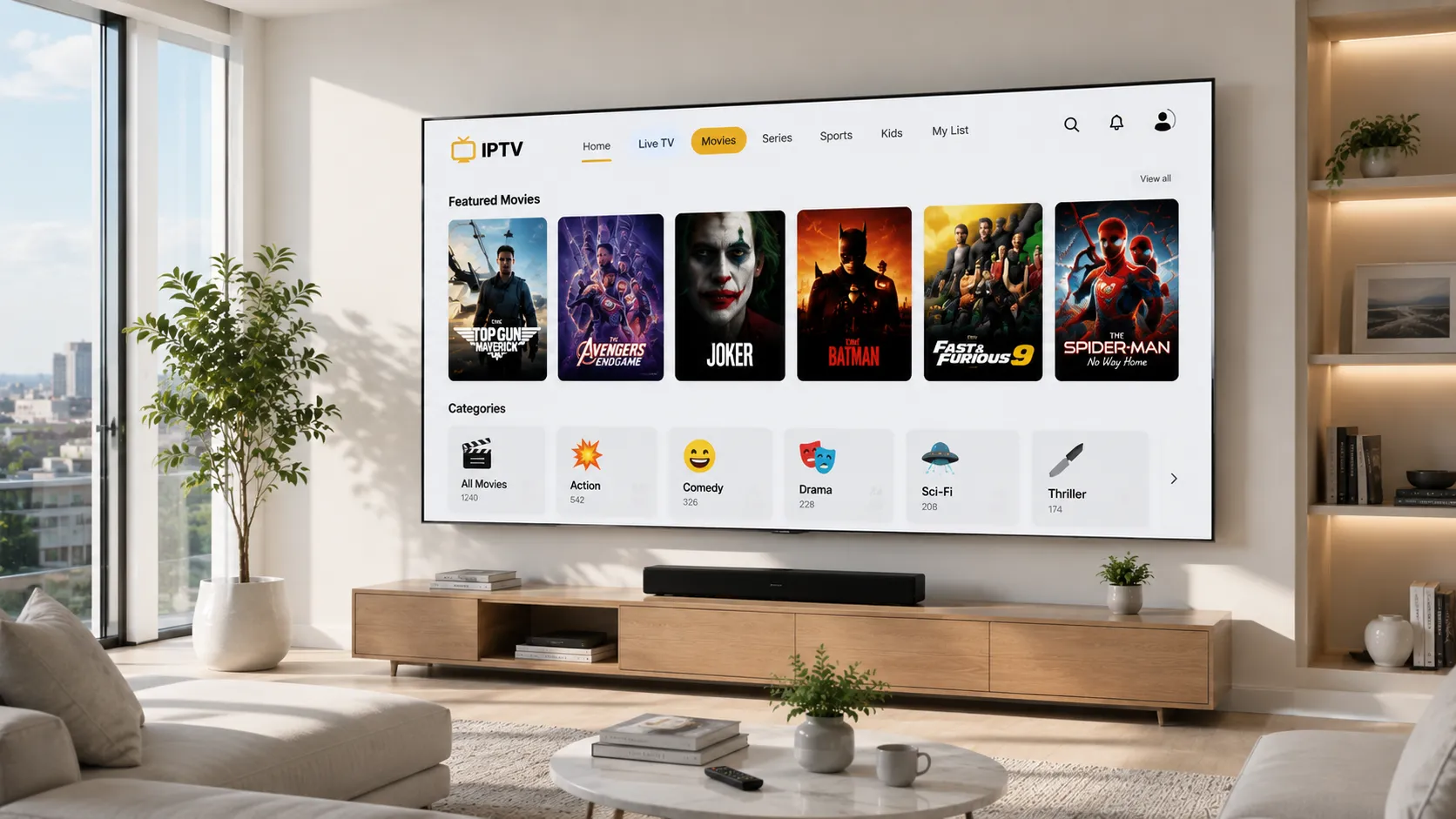
IPTV vs cable TV: side-by-side comparison
| Factor | IPTV | Cable TV | Advantage |
|---|---|---|---|
| Monthly cost | Significantly lower | Higher; rises after intro period | IPTV |
| Contract required | Usually none; month-to-month | Typically 12–24 month contracts | IPTV |
| Equipment rental fees | None — uses your own device | Monthly set-top box rental | IPTV |
| Installation required | No — self-service setup | Yes — engineer visit required | IPTV |
| Device flexibility | TV, phone, tablet, PC, Firestick | Limited to connected TV sets | IPTV |
| Channel count | Large (varies by provider) | Large (varies by package) | Similar |
| Local channels | Varies by provider and region | Consistently included | Cable |
| Internet dependency | Requires broadband | Independent of broadband | Cable |
| Setup time | Minutes — self-service | Days — engineer scheduling | IPTV |
| Price transparency | Fixed monthly; clear pricing | Complex bundles; price creep | IPTV |
| Cancellation | Cancel any time; no penalty | Early termination fees common | IPTV |
Cost: the biggest practical difference between IPTV and cable
The cost gap between IPTV and cable TV is where the comparison is most straightforward. Traditional cable television in the US is expensive — not just in the headline monthly rate, but in the full cost picture that includes equipment rental, installation fees, service call charges, and the price increase that invariably arrives after the promotional period ends.
Cable providers in the US routinely offer introductory pricing that looks competitive for the first twelve months. After that period, the rate typically increases substantially. The equipment rental fees for a set-top box or DVR add to this monthly cost. If you have more than one television in the household, each additional outlet often incurs its own monthly fee. When you add these costs together, cable TV's real monthly cost for a well-served household frequently exceeds what most consumers expect when they sign up.
IPTV subscriptions, by contrast, involve a single monthly fee for the subscription itself. There is no equipment rental because you use your own devices — a Smart TV, Firestick, phone, tablet, or computer. There is no installation visit to schedule or pay for. There are no per-room fees. The subscription price you see is the price you pay, with no promotional period that resets to a higher rate after a year. For a multi-TV household, the difference in true monthly cost between IPTV and cable can be substantial.
For a detailed breakdown of IPTV subscription plan structures and pricing tiers, see our IPTV subscription plans guide.
Channel selection: quantity vs. what you actually watch
Both cable TV and IPTV offer large channel counts, and comparing raw numbers between the two is largely meaningless. The more useful question for any household is whether the specific channels they watch regularly are available on the platform they are evaluating.
Where cable TV has an edge: local channels
The area where cable TV consistently outperforms IPTV for US viewers is local channel availability. Cable providers carry local broadcast network affiliates (ABC, CBS, NBC, FOX, PBS) for the specific market they serve, with full local scheduling — local news, local weather, and locally relevant programming. IPTV providers vary widely in their local channel offering. Some carry national feeds of major networks; some offer local affiliates for major markets; many do not include local channels at all, or include them only for a subset of geographic areas. If local channels — particularly for local news — are important to your household, confirm specifically with any IPTV provider whether your local affiliates are included before switching from cable.
Where IPTV has an edge: international and specialist channels
IPTV typically offers considerably more depth in international and specialist channel categories than cable providers. For households that want access to programming in languages other than English, sports from non-US markets, or very specific genre channels, IPTV's channel library is typically broader and more diverse than what cable packages offer at comparable price points. This breadth of international content is one of the reasons IPTV has become particularly popular with multicultural households and with sports fans following leagues beyond US domestic coverage.
Sports channel coverage
Both cable and IPTV can carry the major US sports networks, but the specifics of which channels are included — and how reliably sports streams perform during peak-demand live events — requires specific investigation with any provider you are considering. Our detailed IPTV sports channels guide explains what to ask and how to evaluate sports coverage before subscribing.
Thinking about switching from cable to IPTV?
Tell us which cable channels matter most to your household on WhatsApp — we will confirm whether FlixIPTV8K covers them before you make any changes.
Flexibility and contracts: IPTV's clearest advantage
The contract and flexibility comparison between cable TV and IPTV is where the differences are sharpest and most consequential for consumers. Cable TV in the US is built around contracts — typically twelve or twenty-four month agreements with early termination fees that can be significant. These contracts are the mechanism by which cable providers lock in subscribers at the introductory rate, and they transfer risk from the provider to the subscriber: if the service turns out not to meet your needs, cancelling early costs money.
IPTV subscriptions are typically month-to-month with no long-term commitment. You subscribe, you use the service, and if it does not meet your needs you cancel at the end of the month with no penalty. This low-commitment structure means you can evaluate an IPTV service on its actual performance rather than taking a provider's word for it based on their marketing — and you can leave without financial consequence if the service does not deliver what you need.
The device flexibility comparison also favours IPTV significantly. Cable TV content is delivered to the physical TV sets in your home that are connected to your cable box. Watching on a different device — a phone, a tablet, a laptop at a different location — typically requires the cable provider's own streaming app and may have restrictions on what content is accessible. IPTV is inherently device-agnostic: your subscription works on your Smart TV, your Firestick, your Android phone, your iPhone, your computer, and any other compatible device, wherever you have internet access.
Reliability and picture quality: an honest comparison
Cable TV has a genuine technical advantage in one area: it delivers its signal independently of your broadband connection. When your internet goes down, your cable television continues working. For IPTV, your broadband connection is the only delivery path — if the internet fails, IPTV fails with it. For households with highly reliable broadband, this distinction is rarely a practical issue. For households in areas with less consistent internet service, it is a genuine consideration.
Picture quality for both services has converged significantly as IPTV delivery infrastructure has improved. A well-run IPTV service delivering a high-bitrate HD or 4K stream over a fast broadband connection produces picture quality that is comparable to — and in some cases better than — what cable TV delivers. The variable in IPTV picture quality is your connection speed and the quality of the specific stream from the provider. A poorly optimised IPTV stream will look worse than cable; a well-delivered one will match or exceed it.
You want flexibility and lower cost
No contracts, no equipment rental, cheaper monthly cost, accessible on all your devices, easier to start and cancel. Better for multi-device households and those who already have reliable broadband.
You need local channels consistently
Local affiliates are more reliably included with cable TV. Also more resilient if your broadband is unstable. Better for households in areas with less reliable internet service.
Who should choose IPTV over cable — and who should stick with cable
This comparison comes down to your household's specific viewing priorities and infrastructure situation rather than an absolute verdict that applies to everyone.
- Choose IPTV if you already have a reliable broadband connection, your priority channels are national rather than hyper-local, you want to watch on multiple device types, you want to avoid long contracts, and controlling your monthly spend is a priority.
- Consider cable if local channel access is essential for your household, your broadband is unreliable or slow, or you prefer having a single provider responsible for both your TV and other services under a bundled arrangement.
- Consider both in parallel temporarily if you want to test IPTV before cancelling your cable subscription. A month-to-month IPTV subscription gives you the time to verify that the service covers your needs before you commit to giving up cable entirely.
For the legal context around choosing an IPTV service — including what makes a provider legitimate and what to look for before subscribing — our parent guide on legal IPTV service covers this topic thoroughly. For everything else about what FlixIPTV8K offers, visit our homepage.